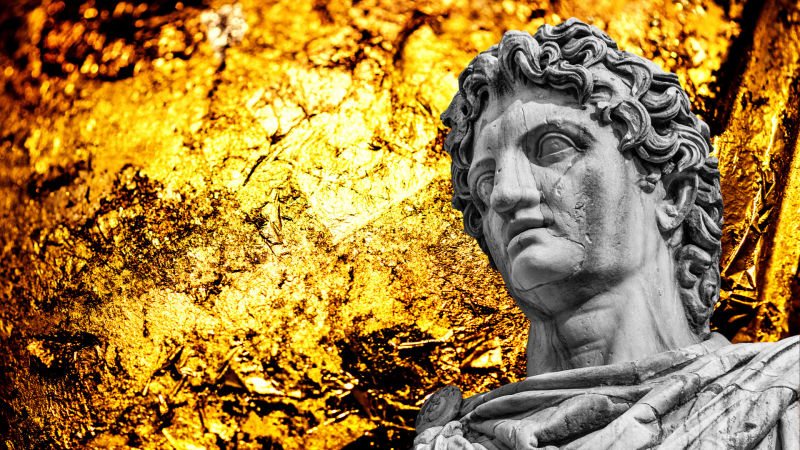
A team of archaeologists from Democritus University of Thrace discovered an exceptional object belonging to the conqueror Alexander the Great. According to Bartsiokas, this violet color, reserved for the conquered Persian elites, was only obtained from a rare Tyrian dye. The Carnegie Museum of Natural History in Pittsburgh notes that this hue was used in authority garments, from royal robes to the togas of censors.
It is believed that Alexander the Great seized a treasure of 5,000 talents in purple fabrics in Susa, possibly accumulated as royal tribute. The Macedonian leader, famous for unifying Greece and conquering the Persian Empire, left a significant historical and cultural legacy.
The finding took place in Tomb II at the archaeological site of Vergina, in northern Greece. There, an ancient violet tunic, or "chiton," was found, which is presumed to have belonged to Alexander the Great. The research team led by Antonis Bartsiokas believes the burial may house more objects from the emperor, as well as the remains of his brother, Philip III Arrhidaeus.
To identify the garment, experts used an infrared analysis system and gas chromatography. The violet color of the tunic is a key element that links it to its legendary owner, recognized as one of the most outstanding strategists in history.